Your Company Is Still 'Using AI.' Theirs Already IS an AI Company.
Based on three McKinsey agentic organization reports and my two-month AI tool journey, why small businesses must move from AI Enhanced to AI Native.


I haven't posted for two months.
AI moved faster in those two months than in the entire year before. I've been learning nonstop, and thinking about where my own business is headed.
Looking back, from 2023 through the first half of 2025, I was in what I'd call "AI Enhanced" mode. AI was a plugin, not the core. I'd have it draft copy, crunch data, sketch customer replies. But the pattern was always the same: I asked, it answered.
The shift started in April. I migrated my OpenClaw agent instances to Hermes, trying to find something more stable that wouldn't keep forgetting context. By May, Claude Code and Codex had dropped major updates, and I started learning to write code and build automations directly. My wife, who never learned to code, started using Claude Code to write automation for our e-commerce business.
By June, I was telling friends: forget OpenClaw, forget Hermes, get on Codex. Twenty bucks a month. Best money you'll spend.
Then Anthropic dropped Fable5.
You don't write code. You describe what you want in plain English or Chinese, and it generates a working program. Our whole family tried it for three days. My wife used one sentence to build a Go game for our kid. I used it to quickly validate business ideas. No Python to learn, no environment to set up. Describe it clearly, and it runs.
The thing that hit me wasn't "another tool update." It was that the floor dropped out again. Someone who has never touched code can now get an AI to write scripts, systems, programs in plain language. At that point, the line between "AI Enhanced" and "AI Native" snaps into focus.
That's when I started hearing the term "AI Native." Its counterpart was what I'd been doing since 2023: "AI Enhanced."
Last week, I read three McKinsey reports on "agentic organizations." Strategy, technology, execution, how to connect it to your own business. Suddenly the whole picture made sense. This year actually belongs in the history books.
89% of companies are still running industrial-era org charts
Here's a number from McKinsey.
89% of companies still have industrial-era structures. Rigid hierarchies, clear chains of command. Information flows up from the front lines, gets sorted by middle management, reaches the top, then flows back down. Takes a week if you're lucky. Months if you're not.
9% have reached digital agility. Cross-functional teams, iterative sprints, flatter communication. Better. But not enough.
Only 1% are building decentralized agentic networks.
BCG's numbers back this up: companies "advanced" in AI maturity see 1.7x revenue growth, 3.6x three-year shareholder returns, and 1.6x EBIT margins versus laggards.
Your first thought: that's a Big Company problem. What's it got to do with me?
That's exactly the problem. Almost everything written about AI organizational change focuses on Google, NVIDIA, the banks. Small businesses get ignored. But small businesses have the most room to move and the lowest cost to try.
Big ships turn slowly. Small boats pivot first.
AI Enhanced and AI Native are not the same thing
Let's get the definitions straight. They sound like variants of the same idea. They're not. They're two completely different ways of existing.
AI Enhanced means bolting AI onto old workflows. You keep doing what you did before, just faster. Customer service still handles tickets, just in 30 seconds instead of 5 minutes. Copywriting still produces drafts, just in 10 minutes instead of 2 hours. Product selection still involves browsing, just with automated data crunching.
That's what most people have been doing for three years. Me included.
2023: I treated AI like a search box. Asked a question, got an answer, done.
2024: I wove it into workflows. Outlines, data sorting, retrospectives. The keyword was "save time."
First half of 2025: I chased reliable delivery. Asset libraries, task breakdowns, templates, automation scripts chained together. Getting AI from "can talk" to "can finish."
But all of it was still Enhanced. AI was an add-on, not the engine.
AI Native means rebuilding your organization around AI. Not making people adapt to AI. Rebuilding the workflow so AI is assumed from the start. The question isn't "what did I do with AI?" It's "would this business logic even exist without AI?"
McKinsey's core concept is the "Work Chart" — a work network graph. Traditional org charts answer "who reports to whom." Work Charts answer "how do we hit this goal?" A goal auto-decomposes into N tasks. AI handles what it can. Humans handle what requires judgment. Dynamic task squads form, execute, dissolve.
The manager of the future isn't a boss. They're a conductor.
This isn't sci-fi. McKinsey is integrating 25,000 agents into its own global collaboration network, targeting 1:1 employee-to-agent pairing. One global bank runs KYC processes with 10-agent squads, dramatically improving quality and consistency. Another bank uses human-supervised agent squads to modernize legacy core systems, cutting time and effort in half.
I'm not making these up. They're from McKinsey's September 2025 report The Agentic Organization and April 2026's Building the foundations for agentic AI at scale.
Why small businesses actually benefit the most
This is the counterintuitive part.
Big companies have resources, talent, data. But their biggest drag is organizational inertia. Middle managers afraid of losing power. Department walls that won't come down. A decision that takes six months just to get approved.
Small businesses have none of that. But they have one thing big companies can't buy: no baggage.
McKinsey mentions a number: a core team of 2-5 people can already supervise 50-100 specialized agents running end-to-end processes.
That's a one-person company. That's a small team.
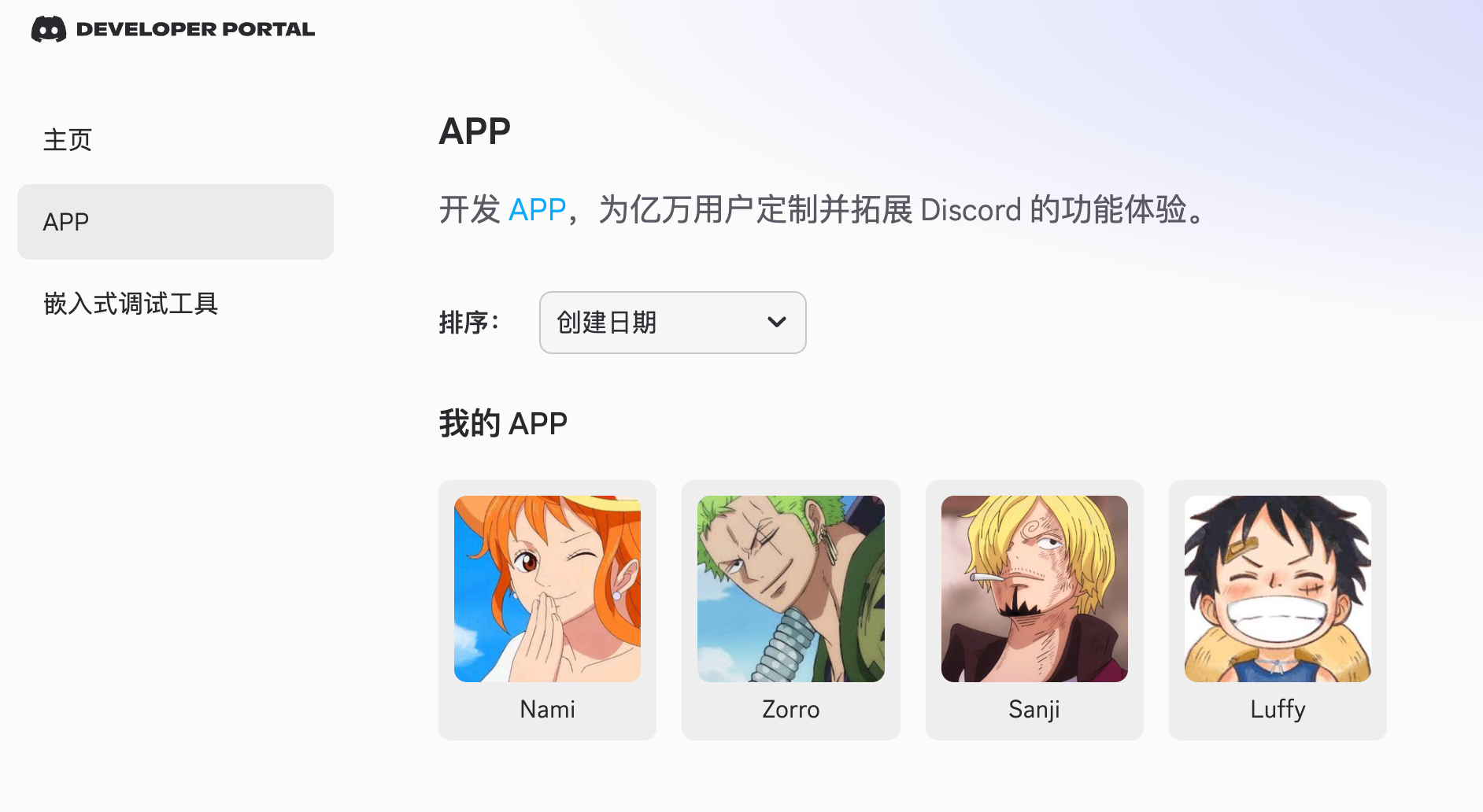
I'm living proof. My eBay store, my independent site product selection and automation — all run by agent profiles with distinct roles. On my Ship Thousand Sunny,
Luffy handles coordination and knowledge management.
Zorro manages daily e-commerce operations.
Sanji runs social media.
Nami (my writing assistant) manages content and drafts.
Yes, the article you're reading now was written collaboratively with Nami.
I'm not "using AI tools." I'm running a carbon-silicon hybrid team.
Another key insight from the reports: demand for AI Fluency has risen 7x in two years.
What is AI Fluency? Not whether you can use ChatGPT. It's whether you understand how AI thinks, trust its execution, and leverage its capabilities. Like learning English — it's not about memorizing vocabulary, it's about holding a real conversation with a native speaker.
When AI can automate 57% of working hours in the US, human value boils down to three things. First, problem definition. AI can answer "how," but never asks "why." The person who finds the "why" is worth 10x the person who solves the "how." Second, value judgment. AI calculates cost-benefit. It can't calculate user feeling, brand warmth, long-term trust. Third, system orchestration. Combining human and AI strengths to win. This will be the scarcest skill.
These three abilities come naturally to small business founders. Because you have to be strategist, executor, and judge all at once. You're just missing a framework to systematize them.
Two companies. Two paths.
Here's a concrete comparison.
Company A bought ChatGPT Plus and Claude Pro. A few employees use them here and there. Customer service drafts replies with it. Copywriting generates outlines with it. Operations runs data through it. The boss thinks "we're using AI now." But every department still works the old way, with one extra step: "ask AI first." Efficiency improved after a year. Org structure? Unchanged. Workflows? Unchanged. People's roles? Unchanged.
Company B has two people but redesigned three core processes. Product selection went from "manual browsing + gut feel" to "AI monitors market data, anomalies trigger alerts, human makes final call." Content production went from "write it yourself" to "AI generates draft, human adjusts tone, auto-distributes to multiple platforms." Customer service went from "manual replies" to "AI handles common questions, complex cases escalate to human, after-sales data auto-feeds back to analysis."
Company B's two people are doing what used to take Company A's eight.
The gap isn't tools. It's organizational paradigm.
A line from McKinsey stuck with me:
"You can only learn by doing, not by reading books or talking about it on the golf course."
This isn't the end. It's the beginning.
By now you probably get what AI Native means, and why it matters for small businesses.
But knowing isn't doing.
The gap between AI Enhanced and AI Native isn't technical. It's a mindset rebuild. You need to rethink: which of your workflows can AI take over? Which judgments must stay human? Is your data foundation solid enough to support agent collaboration? How do you build governance so AI doesn't overreach and delete your deliverables?
McKinsey's third report offers a four-step framework. But it's written for CTOs and tech teams. Small businesses and one-person companies need something more grounded. More practical.
In Part 2, I'll cover:
- AI Fluency self-check: Which level are you actually at?
- The three-step path: Tool infiltration → workflow rebuild → organizational evolution
- The 7 data architecture principles, small-business minimum viable edition
- The 90-day roadmap: Which scenario to pilot first? How to build your data foundation? How to design governance?
- My wife's real case: How someone who never coded built e-commerce automation in 30 days with Claude Code
This is something you can start tomorrow.
The future is already here. It's just not evenly distributed.
Do you want to be the person who "knows a lot but does little"? Or the one who turns their company AI Native first?
There's no right answer. But time will choose for you.