
AI Generates Images. Photos Hold Memories.
I use AI image generators every day for my e-commerce work. So why am I picking up my camera more than ever? Because AI can generate any picture, but only a photo holds a memory.

My daily work already runs on AI image generation. Back in 2023 I used MidJourney. You typed a description, waited a bit, and an image came out. That was my first real taste of text-to-image. This year, with nano banana pro, generating and editing an image has become as simple as saying a sentence: the lighting, the background, the composition all adjust to what you ask for. Since I started running an e-commerce business, my most-used tool is gpt-image-2. Product shots, lifestyle scenes, posters: it handles most of my day.
So over these three years, from MidJourney to nano banana pro, I've watched text-to-image models evolve up close.
By all logic, someone like me should be drifting further and further away from the camera.
But lately I've been picking up my camera more, not less. The better AI gets at images, the more I seem to love my camera. When the change first showed up, I didn't understand it myself. It took a lot of shooting before I figured out where it came from.
Photography and recording are not the same thing.
Start with recording. Phones are obviously convenient. Pull one out, press a button, shoot anytime, then edit the colors on the spot. For most people who just want to capture daily life, a phone really is far more convenient than a camera. I'm not going to argue with that. Most of the time, that's how I shoot too.
But holding a camera is different. First, there's a sense of ritual in simply gripping it. Before you press the shutter, you have to compose the image in your head. Where the light comes from, where the person stands, how the frame is cut, what emotion the picture should carry. All of it has to pass through your mind before the shutter fires. So photography, to me, isn't simple recording. It's more like a quick sketch. Like sculpture, only the brush has been swapped for a shutter.
I've also been searching for my own style through shooting. That can't be rushed, and I can't even say what direction it's heading. I just keep taking pictures, one frame at a time. As the old Chinese saying goes, in art there's no first place, and in martial arts there's no second. Style has no right or wrong. Only whether people like it or not.
A few days ago I went to the Ohara Museum of Art and walked through a batch of their collection, from oil paintings to sculpture, from realism to abstraction. Honestly, I didn't understand a lot of it. A few pieces just left me puzzled. But here's what struck me: since the day they were made, these works have traveled through different countries and been displayed for decades, sometimes a century, and they're still being visited, studied, and preserved as human artwork. And a few of them, I can't explain why, I just liked.
I think that's what art is worth. Art has no right or wrong. Painting works that way. Sculpture works that way. So does photography.
Going one level deeper, this leads somewhere else.
At a certain age, life stops being just work, money, and rest. Something new enters the picture: the people around you start leaving, one by one. And at some point like that, it hit me that a person should leave something behind in this world, something other than money.
The animated film Coco has a rule in it. After you die, as long as someone living still remembers you, you keep existing. Only when the last person who remembers you is gone do you truly disappear. The first time I watched it, it was just a touching fairy tale. Thinking about it now, it states a hard fact: the traces of our existence end up living only in other people's memories.
So in an age of information explosion, what can one small individual leave behind for this world?
The more I think about it, the more I land on the traditional things. Words. Images. Shapes. And combinations of them. An article, a photograph. Together they form the traces of our existence in this world. Technology has changed enormously, but that layer has never changed. Only the storage medium has: from cave walls to parchment, to paper, to hard drives.
Photography is exactly this: accumulating and keeping the small, beautiful moments of life. Every scene in life happens only once. In the past, people needed professional training and a long time to record what they saw with a brush. Now, with a camera, we have one more way to create, one more way to hold a moment with our own hands.
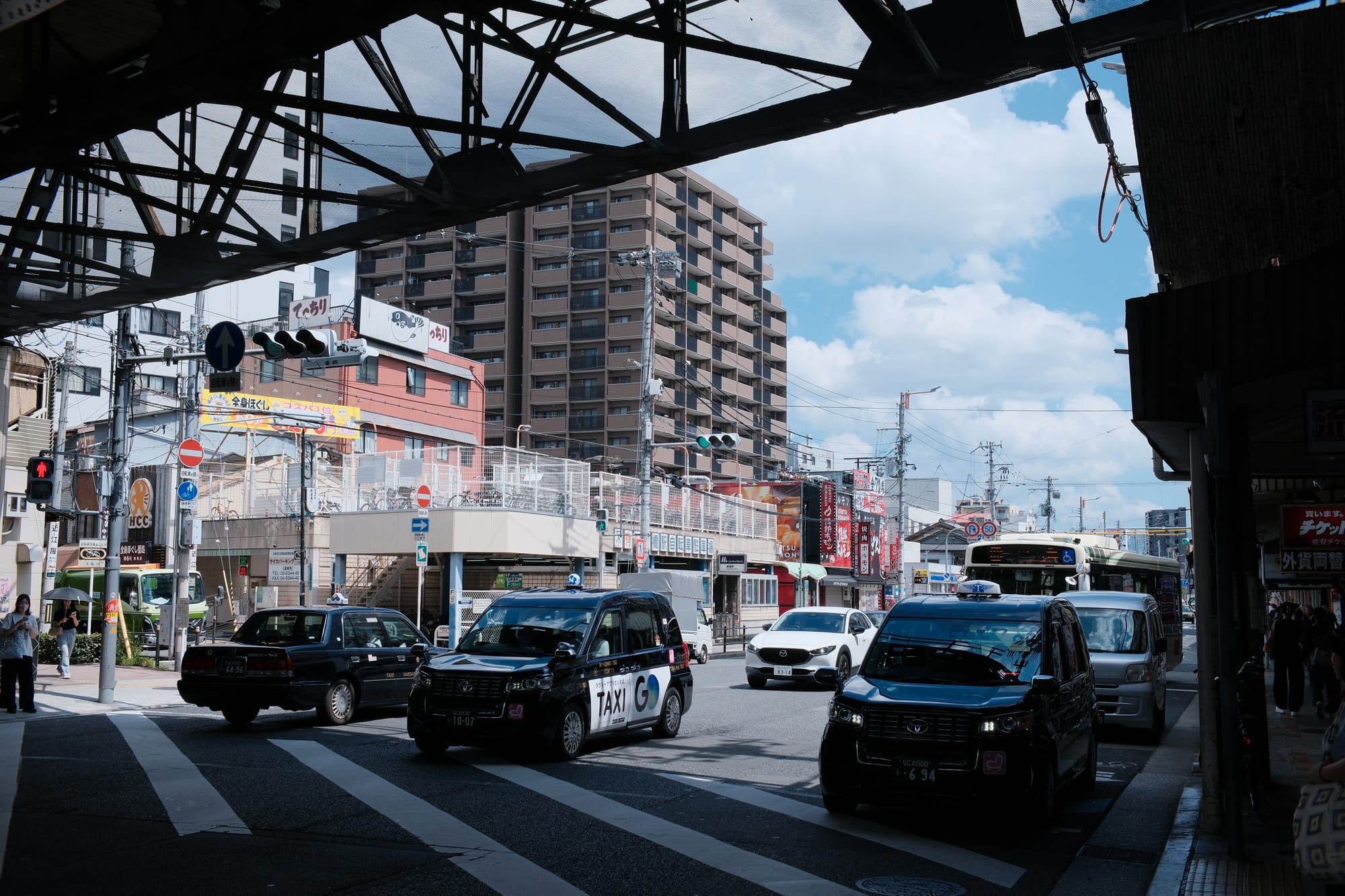
And every photograph is like a time stone. When I open one, I'm back at the moment I pressed the shutter. The scene, the atmosphere, the mood. They all come back. That's the difference between an image and a photograph. AI generates images, and the images are beautiful, but they don't hold anything. A photo holds a memory, and that's why those beautiful AI pictures are not in my memory, and I can't feel them.
I've been organizing my own photo gallery lately. A simple one, for myself, and for friends who want to look. Whoever ends up seeing it, if there's a photo in there that someone likes, or that makes someone smile, then it was worth taking.